Wednesday, November 16, 2022

Three Shining Black Faces/To Those Who Enable Violence by Inaction

Evil surrounds us

In the form of guns.

Used by the maladjusted,

Enabled by those

Who feel their rights supersede

Victims sleeping, studying, listening, worshipping: 

Caught of guard.

Act of cowardice

Mute until the perpetrator pulls a trigger.

Afraid to speak

Words hurt but do not kill.

Unable to look at the picture of the three shining young men

Murdered for no reason.

Shaking with grief and rage.

Please--stricter laws and enforcement.

Cease the murder

For which you are responsible, culpable.


©Karen Levi 2022

Wednesday, November 2, 2022

JEWS IN SMALL PLACES


JEWS IN SMALL PLACES
By Karen Levi

Periodically, one hears or reads about a small Jewish community in a location not typically associated with Jews—in Uganda, Turkey, Morocco, Ukraine. I have visited several of these barely surviving enclaves. Often, a tiny worship space exists with an older man or woman as caretaker. Young people have flown the coop for good reason. Educational and economic opportunities are nil. Frequently, the former residents emigrate to Israel which accepts Jewish immigrants. 
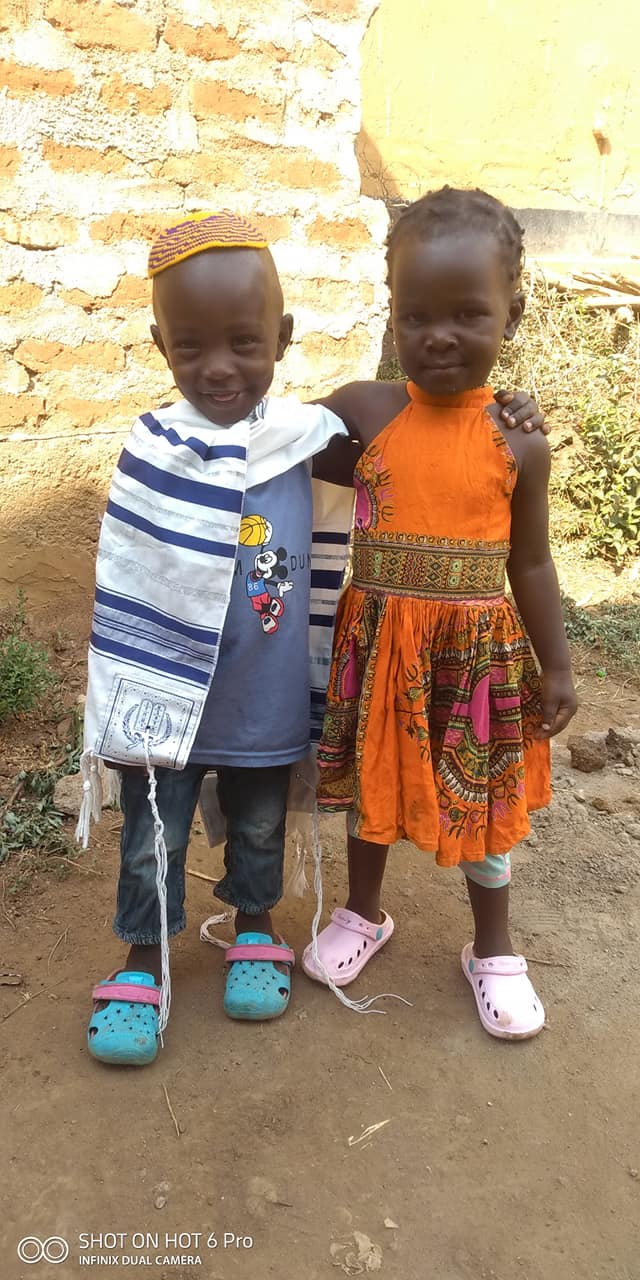
BJC has been assisting a village of Jewish subsistence farmers in Uganda. The leader of the Ugandan Jewish congregation sends photos of children and adults celebrating festivals and holidays much as we do, albeit in simple structures with makeshift materials. The smiles on the faces of the children and the pride in the posture of the adults communicates a sense of worth and purpose.
I have seen small spaces for Jewish worship in Morocco and in Lviv, Ukraine. In Casablanca and Marrakesh, I visited viable synagogues, but in other cities I was led into musty, decrepit rooms with faded remnants of Jewish worship. Most probably, all the Jews had disappeared from those towns. In Lviv (before the present war), the former synagogue was a wreck—rooms with broken down walls and peeling paint. Memories of my trip to Cuba recalls Jews in small towns barely hanging on, their population dwindling continuously. Sadly, there are no solutions, and most of these places will become abandoned.
The village in Uganda thrives with extreme challenges—lack of land, water, viable housing, healthcare, education. But it is not dead yet. The Jewish inhabitants yearn to connect with other Jews. In the past, the Jews in Cuba appreciated any communication with congregants of synagogues in the United States.
I believe these small enclaves may hold the key to the future of Judaism. That is why they need our support. These people follow traditional Jewish practices without the encumbrance of the conflicts modern Jews confront, for example does the Bible make sense in our world, what practices do we follow, will my child have a Bar/Bat Mitzvah, should I join a synagogue. Israel should not have this role, due to their myriad political, social, and cultural difficulties. 
Judaism serves as a core and organizing principal in the lives of the people remaining in small regional groups. The Jews who live in these towns—who may not be like secular Jews of the developed world-- observe practices which we might describe as Orthodox. However, these villagers and farmers do not live separate from their surroundings, as the ultra-religious sects do in the “first world.”
History has proved that we Jews have yet to find a safe permanent home. Recent news reveals that antisemitism lurks barely beneath the surface of our everyday lives in the developed world. Antisemitic tropes and actions leap or slither out from havens in the Right and the Left. Those of us alive today exist in a short blip in time--no telling what might happen in the far future. Jews could become wanderers yet again. 
The weekly Jewish bulletin of the San Francisco Bay Area reported on a small town at the Syrian-Turkish border, once an important city; now a vestige of the past, a fading Jewish community of elderly residents who do not want to leave. One resident said, “I was born in Antakya and I will die in Antakya.” In Antakya, Jews practice the faith, lead a productive life, and are less affected than those parents who do not want their children negatively affected by the retelling of history or crazed gun toting individuals who enter houses of worship. 
I am not suggesting that modern Jews pack up and relocate to small villages, go off the grid, revert to life in the 19th century, or become hermits. Education and economic opportunity continue as the keys to progress and improvement in the lives of all people. I exist in the comfort and advantages of the 21st century. However, I emphasize the importance of saving and helping those who maintain rituals and practices which keep Judaism a vibrant religion. They may save us yet.


©2022 Karen Levi

Monday, October 31, 2022

Wandering Jew in Germany

 The older man in an overcoat and hat, trudging along--that is what I imagine. Or the purplish plant that grows quickly and easily. But the assimilated American Jew leaving the United States? To be honest, the thought has been lodged in my head, sporadically rising to the surface. I am the daughter of Holocaust survivors. To Israel, I believed. But now our ancestral, spiritual homeland is fraught with threatening political divides. Would I go from the frying pan into the fire? No, now it is Germany. Yup--escape to Germany.

My mother and father would have considered me deranged. They narrowly escaped Germany with their parents in 1938-'9. But, think about it? Young Jews from Israel have been moving to Germany to escape the highly fraught atmosphere in Israel concerning the Palestinians. Germany is not a nirvana; right wing parties with members who are antisemitic threaten stability. Certainly, a strong anti immigrant movement exists in Germany, as in other European nations. 

A strict system of anti hate speech laws, passed by the Bundestag over the last 78 years since the end of World War II, mark a great difference between Germany and the United States. The German Penal Code forbids the public display of Nazi propaganda and symbols on and offline. These laws contrast with the 1st Amendment rights of Americans which do not limit hate speech. The broad interpretation of the 1st Amendment has enabled an increase in the expression of hatred and crimes against specific ethnic/racial groups in the last 12 years, as reported by CNN. 

Statistics can be viewed and analyzed from myriad angles. However, the occurrence of mass shootings, virulent expressions, and rallies to promote hatred have risen in the 21st century. Of course, our country experienced racial/ethnic disturbances throughout our history. Increasingly, the latter events are accompanied by manifestos of antipathy online. The dark web is no longer cloaked in the shadows. The light shines strongly on words of detestation for the purpose of inciting hostility and violence. 

Just days ago, a crazed individual broke into Speaker Nancy Pelosi's house to injure her (but seriously hurt her husband instead). And this guy carried a hammer not an AK-47. He hated the speaker which echoed the invaders of the January 6 Capitol riot, during which they shouted, "Where's Nancy?" The perpetrator spouted antisemitic tropes, as well as other junk, on his blog. He has been charged with seriously injuring Pelosi's husband, among other federal and state crimes. 

Let us pause a moment--the man who injured Paul Pelosi could have stood on their street with a sign that expressed some bizarre thoughts, and he would not have been arrested or, if so, for a misdemeanor. Hillary Clinton was similarly maligned in 2016 when a Republican crowd yelled, "lock her up." These slogans not only spew hatred and encourage violence towards an opponent but are misogynistic. In September, an infamous American hater was arrested at Auschwitz for displaying a sign with an antisemitic message. The Poles did not consider free speech in such an egregious case. This individual--now released--continues spreading hate in our country, recently seen on a Los Angeles overpass with a sign, "Kanye was right."

Recently, I attended a concert by SONiA disappear fear, a Jewish folksinger from Baltimore. She frequently tours in Israel and Europe. Evidently, her music is well-known in Germany. One of her original compostions is Wandering Jew. Strange coincidence that she performed a song just as these thoughts of escaping to Germany occurred in my mind. And two months ago, after years of bureacratic hassles and confusions, I received my German citizenship, based on my parents' being stripped of their nationality and native status in 1938. 

I view Germany as an escape hatch. I do not have immediate plans, but it is always good to be proactive and prepared. I will certainly travel to Germany more frequently, and I am renewing my German language skills. They have lied dormant for many years. 

I have been directly involved in several projects in Germany since 2019. One is the Stolpersteine project developed by Günter Demnig, a German artist. The brass plaques, placed in the sidewalk, commemorate victims of Nazi persecution. My sister and I participated in the ceremony in Frankfurt for our paternal great grandmother. A Stolperstein was embedded in a Berlin sidewalk for a great aunt. Both of these women were cruelly murdered by the Nazis. We hope to have three more installed in Konstanz, our father's birthplace. My sister and I participated in Denk Mal Am Ort in 2019, a unique program occurring once a year in private residences in Berlin, Frankfurt, Münich, and Hamburg. The present owners of a property invite the relatives of Jewish residents of a particular house or flat from the 1920's-'30's to tell the story of their parents, grandparents, etc. 

These activities introduced me to Germans who denounce persecution, oppression, and the Nazi past. The German viewpoint changed over the course of the last 80 years. The contemporary populace and government are like the criminal who was caught in the act and learned from a mistake. The U.S.A. of today is akin to the criminal who was caught but will not admit wrongdoing. One pleads guilty, the other not guilty, different from innocent.


https://www.cnn.com/2021/08/30/us/fbi-report-hate-crimes-rose-2020/index.html

https://www.pressdemocrat.com/article/news/petaluma-mans-anti-semitic-stunt-draws-newsoms-ire/

https://www.soniadisappearfear.com/


Monday, October 3, 2022

A Mitzvah Revealed Admist Major Mayhem

 Darcy Bishop is someone I will never know. She lives in Naples, Florida. She exemplifies incredible bravery, self-sacrifice, love, and commitment. Regardless of whether she has made the best decision for herself to care for her disabled brothers, she did a mitzvah for them. 

A mitzvah is a good deed which bonds one with others. The Talmud states, "whoever saves a single life" is considered by this holy book "to have saved the entire world." This mitzvah is also known as Tikkun Olam or repairing the world. I greatly admire Darcy Bishop whose life is more difficult than mine.

I do not know why Ms. Bishop did not evacuate. She had family and friends around the state. She cared for two handicapped brothers, one wheelchair bound and strenuous to transport. Reportedly, she recently underwent knee replacement surgery and was not supposed to put unnecessary strain on her knee. Ms. Bishop is no longer a young woman, though she is at least doing the work of two full time health aides, not to say housekeeper, cook, and advocate. She and her brothers are in their sixties.

During Hurricane Ian, her house began to flood. She decided to move her siblings to the second floor. One brother walked up the steps without much distress. The other brother was unable to complete this task due to Cerebral Palsy (CP). Ms. Bishop dragged him up the stairs. I can imagine her frustration and exhaustion as she struggled, in panic, sweat pouring into her eyes. 

To drag an immobile man up a staircase would be a nearly impossible task for an average woman. Ms. Bishop demonstrated ingenuity and adaptation. She pulled on her brother through the use of belts. The two 60 + year olds could not reach the top. They literally went up a few steps and then down. Her brother experienced pain; Darcy perspired and strained, but it was too much. Her other brother, also physically handicapped, was unable to help. You see, in addition to CP, these brothers have developmental disabilities. 

As the water rose in the house, she felt impending doom. Ms. Bishop spoke with her daughter. Travel was impossible by this time. She called her parents in Wisconsin to say goodbye. Darcy brought pillows and cushions to her brother, so he would be relatively comfortable. Then she proceeded to save herself or give up. Ms. Bishop did not hold out hope. Miracuously, the water began to recede; she fell asleep; and, upon awakening, realized she had survived (as well as her brothers). Soon after, friends arrived, called other people, and the two brothers and sister lived. 

Of course, the house will be demolished, and most of the belongings are ruined. As the insurance industry sets in motion, impossible tasks are imposed on people like Darcy and her family in order to be reimbursed. This is a woman who does not have a typical job due to the injuries she has developed due to the strain of her difficult life. She probably does not possess savings or investments. 

I hope a good samaritan helps her. I certainly would if I knew she would get the help and not some scammers. Irregardless, her behavior serves to show us that there are still those who sacrifice to help family members, no matter what the circumstances. Her humble life and self-sufficient attitude are remarkable. 

There are certainly those in Florida who lost beach houses that were built where no house should go. I am fairly certain, Florida is a state that caters to the wealthy instead of the needy. These affluent second homeowners will work the system to be reimbursed by insurance and obtain whatever aid is available.  But, it is the folks who have lost their only property and valued possessions and will be left penniless and poorer than before the storm. 

This is the reality of life--those who get ahead, stay ahead; those who have an education and a decent living, pension, or investments have a safety net. I am one of the lucky ones in terms of a cushion in case of emergency. But, I, like Ms. Bishop, have taken on the responsibility of caring for a disabled family member. My adult daughter with Autism does not get much assistance from our liberal state. They feel she is not "disabled enough." So I understand Ms. Bishop's plight somewhat though not completely. 

The Bishop family members are the innocent victims of tragedies all over the world--not bums or lazy people. But strong individuals who have made excrutiating decisions when faced with burdensome situations.

I Did All I Could’: As Floodwaters Rose, She Fought to Save Her Disabled Brothers
https://www.nytimes.com/2022/10/02/us/sister-ian-rescue-brothers.html?smid=nytcore-ios-share&referringSource=articleShare

©2022 Karen Levi

Saturday, September 17, 2022

Why am I enamored of British royalty? (And I am certainly not alone.)

 So why do I care about the royals? Is it merely a distraction, similar to following movie stars? Am I living vicariously? Yes to all of the above questions. I love the pomp and circumstance, the ritual, the uniforms, and  the beautifully dressed people. I adore the carriages, horses, color, discipline, and music.  I admire the different suits for every occasion; the coats, hats, and fascinators for women; the little children's traditional styles. 

We do not have a monarchy thanks to the founders of our United States of America. Our federation of states and central government were formed in opposition to the English system. The colonial leaders abolished the longheld tradition of heriditary rulers. The writers of the Declaration of Independence and the Constitution adamantly refused any similarity to a sovereignty. A google search reveals numerous monarchies in the world, so why my interest in the British version?

A multitude of reasons exist: our common language, culture, history, and democratic government (executive, legislative, judicial). England established a constitutional monarchy in 1688. Britain and the United States have been inexorably linked since the 17th century. U.S.A. is regarded by Brits as the rebellious child, the audacious independent thinker, and the guache relative. Reluctantly, we saved the behinds of the British after several years of pleading on the part of Churchill during World War II. These facts support my interest in the British royals  as opposed to the Danish or Spanish kings and queens and their families. 

I am aware of the attrocities committed in the name of the British crown during centuries of world dominance. The Commonwealth has probably outlived itself and merely is an excuse for maintaining a hold on former colonies. The "firm," an unofficial nickname for the Windsors, possesses and spends exorbitant amounts of money. Only recently did they accept divorced and biracial spouses (the latter is still questioned). The Queen was old fashioned in a manner similar to my mother. So why am I fascinated?

We are all complex with conflicting and inconsistent characteristics. So I can be a liberal but still be thrilled by royalty. I am attracted to order, ritual, and tradition. The British excel at these components. They know how to put on a show. Americans do this every four years for inaugurations and whenever state funerals are needed. We try, but we lack the flourish and spectacle--the sound and sights of a grand event. When King Charles III is crowned, I do not believe there will be a gray haired guy in a down jacket and bulky mittens slumped crosslegged in the parliament seating section (though I admire that particular man).

There are numerous malicious contemporary and historical monarchs. I have only "known" Queen Elizabeth II in my lifetime. I was seven months old when she became queen. So, she was the generation of my parents. Her children fit into my age group. These are people of my life. We have experienced the same world order. The Queen suffered the trauma of bombings, deprivation, and the existential fears of a world war as my parents did. (It is well known that King George VI, his wife, and the two princesses lived at Windsor during the war.) We baby boomers share characteristics, raised by  parents whose formative years were dominated by war.

Certainly, the Queen erred, and she ultimately admitted her mistakes. I have not witnessed too many American leaders who have said "mea culpa." And these errors were monumental. But, all in all, Queen Elizabeth II remained steadfast, strong, persistant, and hard working for seventy years, traits I admire. She kept her promise to serve and to be neutral. Her seemingly never ending presence demanded respect. We actually have no idea about her political viewpoints. Due to the miracle of modern technology, the world witnessed her grief, stubborn reserve, and--lately--her humor. We know she loved animals which speaks volumes about a person.

Therefore, QEII was a woman who changed in numerous ways; she began as a young, insecure leader dependent upon male advisors. Over the years, she became independent. Her Royal Highness was slow to alter the ways of the past. But she evolved and even pleased the public with lighthearted demonstrations, most recently with Paddington Bear. Her ability to adjust to the everpresent demands is why, to me, she was a good Queen. And what American leader has been on a biscuit tin?


©2022 Karen Levi 


Friday, August 19, 2022

YOU SAID WHAT--GERMAN CITIZENSHIP?

 Being a second generation survivor* or a 2G'er has been a journey. Long before I heard the term, I knew I was one. Actually, for as long as I can remember, my grandparents' and parents' stories have reverberated in my head. Since young childhood, I sensed secrets and repressed emotions and memories swirling around my home. Long before I knew what to do with the information that spewed forth erradically from relatives, it had been lodged inside my psyche. The questions to ask your parents form on your lips early on. They are answered over the years but often not. Frequently, I have forgotten to ask vital questions or did not even know what I wanted or should know. 

Fast forward to the present--after writing two books, visiting my parents and grandparents birthplaces, engaging in endless discussions, researching, reading books, watching movies, and confiding in my sister--I have added information to the virtual tome--Our Story. 

Connie, my sister, and I have had bronze plaques set into the pavement of Berlin and Frankfurt to indelibly mark the murder of our greatgrandmother and great aunt. The governments of Germany and China have memorialized my family and others like them in numerous constructions built of stone.

Today, I became a German citizen at the Embassy in Washington D.C.  Just like that--no interrogation, no Sara beside my name, no stamp Jude or big red J on top of my photo. The consular representative smiled and laughed and was glad to have me join the Bundesrepublik Deutschland. I said to myself, oh she may have Jewish ancestors look at that nose, but she wore a small gold cross. 

Naturally, I accomplished the arduous, frustrating, bureaucratic task--during the pandemic--for my family and the millions who lost their citizenship and became stateless. Connie will become a German citizen in a few weeks. It was a tag team effort. We shared documents. Sometimes I gained a foothold in the system, other times she did--one step forward and two backwards. I am still waiting on a document from the U.S. government, no longer needed. Eventually three German civil servants in Cologne Germany, San Francisco, and Washington D.C. decided that, yes, these two women have proved their case.

Germany decided to naturalize descendents whose parents lost their citizenship between 1933 and 1945 and were stateless as a result of the actions of the Third Reich. The law was The Restoration of German Citizenship (Article 116). 

I never thought about the designation of stateless, in this case the result of a fascist government's heinous actions. Without citizenship, a stateless individual has no legal rights or access to any services or privileges. We know the fate of the stateless Germans during World War II and after. 

When Hitler took away the citizenship of the Jews in 1938, it was clearly a sign to leave immediately. The action signaled that Jews were non-persons, no rights whatsoever. The Nazis changed the names of these previously upstanding citizens--women and girls became Sara, and men and boys became Israel. Miraculously, the lucky ones left Germany because they could afford the criminal manipulation that the Nazis served up. In other words, my grandfathers had enough money to be able to buy tickets after they had lost everything. 

So when people squirm and make faces about Germans, I am a citizen. And I stand proudly. And I know why I decided to claim my right.


* A second generation survivor is the child of a survivor of the Holocaust. 

© 2022 Karen Levi

Saturday, August 6, 2022

IN MEMORY OF SYD JACOBS

 I am privileged to have known Sydney (Syd) Jacobs for many years. She accomplished more in a wheelchair than most able bodied people. I did not know her in her twenties and thirties when she swam to international reknown in the Para Olympics. Most probably, she demonstrated a can-do attitude before the climbing accident which claimed use of her legs. 

Not to be forgotten is her husband, Mark Otto, wonderful father and professional in his own right. Without him, life would have been far different for Syd. Countless times, I saw him carry Syd up and down stairs when a place was not retrofitted for wheelchairs. Speaking of wheelchairs, Syd never to my knowledge used a motorized one. She donned car racing gloves and wheeled up and down hills and rocky pavements. Syd went where no other woman I knew went before. No chore, responsibility, or event slowed her down. I felt honored to be by her side when I accompanied her to lunch or dinner in a restaurant or to canvas for a candidate. Social activist and fierce advocate for her two children, I have watched her at work.

I met her through a parents' group called Latin America Parents Association (LAPA). She and I joined at the same time, since our older children are five months apart. We were active in the organization. She became president and started an innovative culture camp. 

This was the 1990's when we Boomer couples, still idealistic, desired to be parents. Many of us had tried infertility treatments without success. What better way to help underprivileged and underserved populations than to adopt unwanted children. After arduous home studies in the United States, we traveled to Central and South America to endure hardships for our infant children, tolerating unsanitary conditions, long stays, and confinement by corrupt politicians.

Unfortunately, international adoption has ceased due to conspiracy theories and bad actors, resulting in laws which made it nearly impossible to adopt. It should be noted that those who created the new laws had no stake in the process--just a group of white men thinking they were morally upright. I am certain none of them witnessed the poverty in Latin America first hand. 

International adoption, which began in the 1950's with Korean babies, had its heydey in the late 1980's through the 1990's. Now, international adoption is merely a figment of our imaginations. If it was a roaring stream, it is now a dry creek bed. Children languish everywhere. Embryo freezing and surrogacy have replaced adoption. 

Syd and I chose differently regarding education for our children, nonetheless I admired her integrity and tenacity. We shared the value of honesty and seeing through the nonsense. We could talk for hours which we did when we went out together. 

I will remember the play dates in parks, the shared Jewish holidays, and the LAPA events with fondness. In the 1990's and early 2000's, LAPA was my family, a community of parents and children who had a dream to be parents and improve the lives of children born to unspeakable poverty. We were liberal, cool, open-minded, down-to-earth people who valued our choices. That time, as well as Syd, is gone. We have forgotten what we parents did and why. 


Son Kory


Pictures of Syd Jacobs with her family and my children over the years.

©2022 Karen Levi